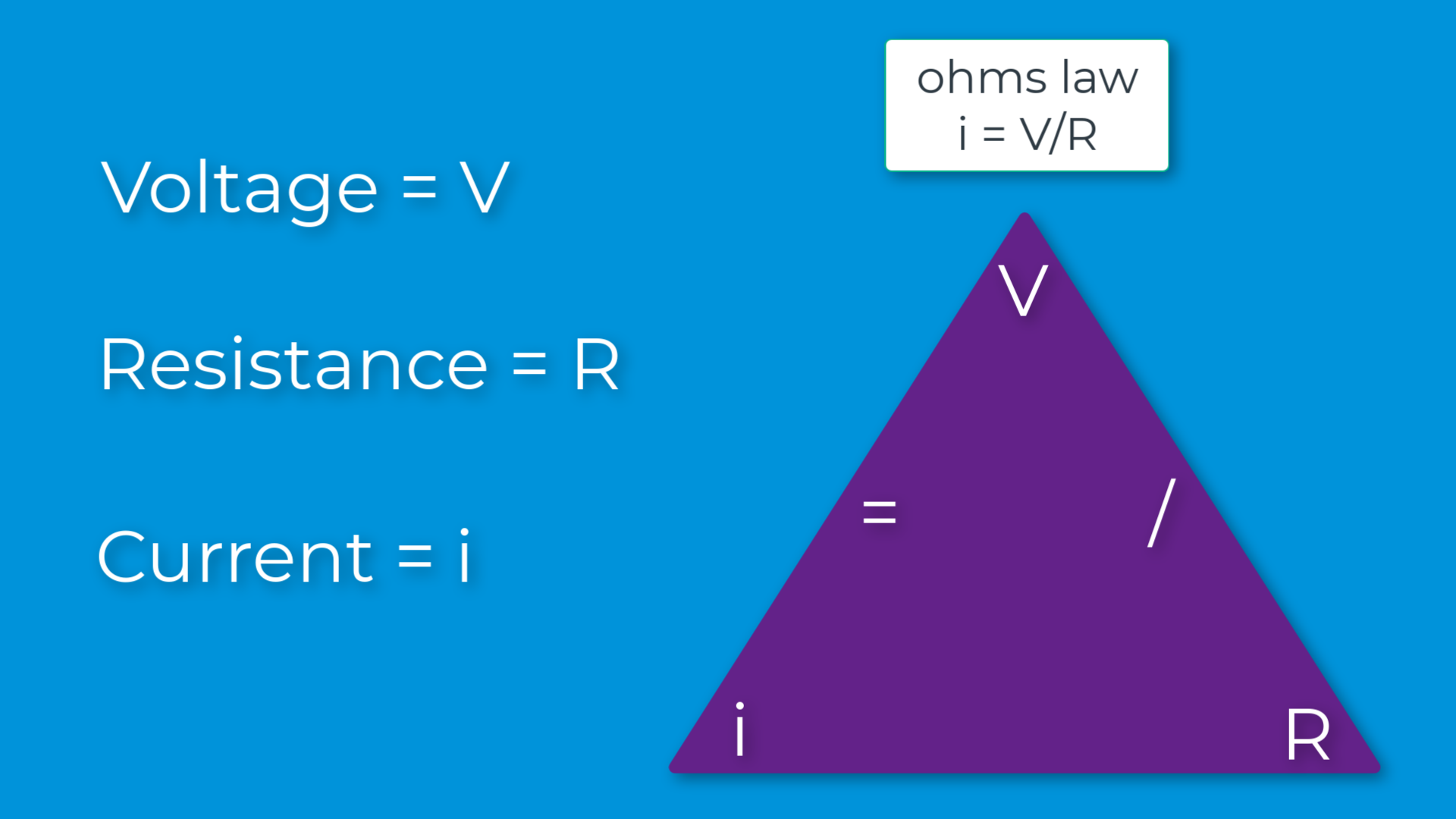
Ohms law is a law that governs how much electric current will flow through a circuit depending on the voltage and resistance of that circuit.
i = V / R
Where:
i = Current
V = Voltage
R = Resistance
Using Ohms Law
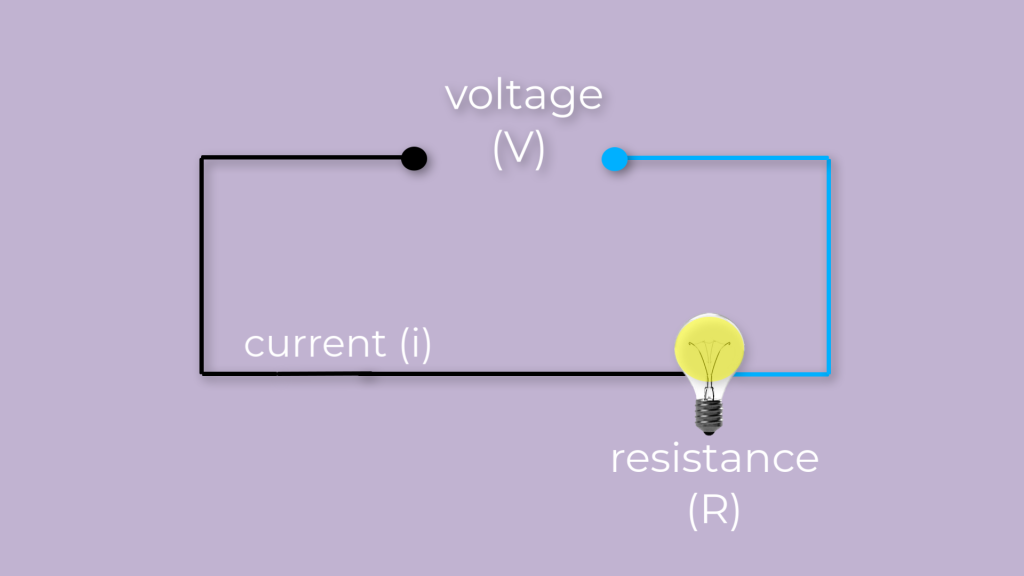
In this simple electrical circuit we have a voltage source (V) and a light bulb which provides a resistance (R). Lets say that we know the voltage and the resistance.
V = 24 volts
R = 10 ohms
To work how how much current (i) is flowing through the circuit we simply punch in the numbers into the ohms law formula.
i = V / R
i = 24 / 10
i = 2.4 amps
Why Do We Care About i?
We want to know how much current is flowing in our circuit because this can effect things like the size of the cable we need to use in the circuit and the size of protection we need to use for the circuit as well. Remember that more current flowing in the circuit means we need thicker cables to handle that current. If the cables are too small they could over heat and cause a fire.
To Recap
The Ohms law formula is used to work out the values of a simple electrical circuit that has voltage, resistance and current. This type of circuit is commonly found in any house that has a light bulb. And don’t forget that the formula is interchangeable, as long as you know 2 of the 3 values you can easily work out the missing value.
Learn more
Fundamentals of Electrical Controls
3 Phase Motor Control Bootcamp
Learn Variable Frequency Drives