
A circuit protection device is an electrical component that protects the circuit by opening the circuit if there is an overcurrent or dead short present. Overloads, circuit breakers and fuses are all circuit protection devices.
How It Works
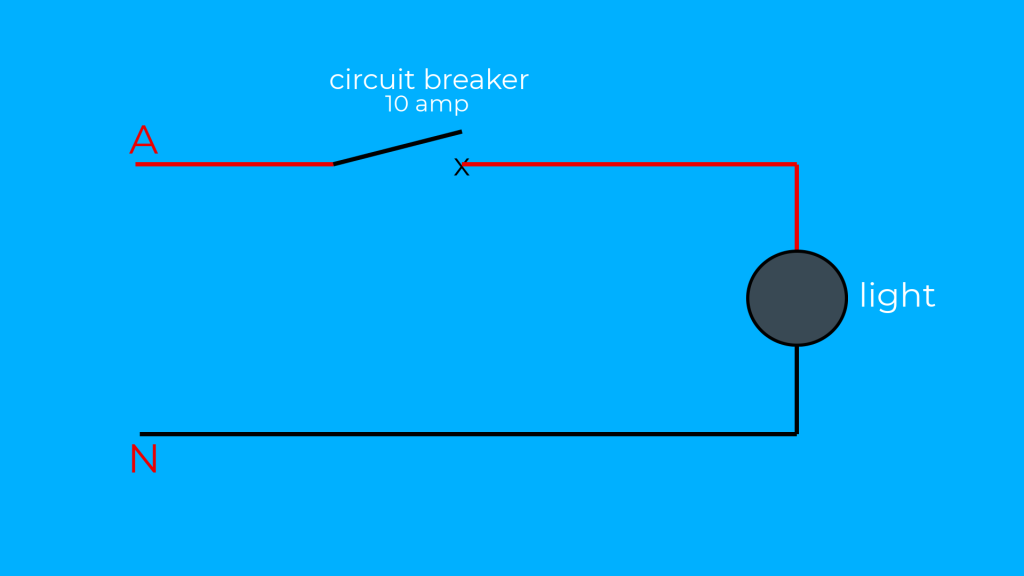
In a basic electrical circuit with an indicator light and a circuit breaker as the circuit protection device, if the circuit breaker is closed then current will flow and the light will be illuminated.

If the current in the circuit goes above the rated amps of the circuit breaker (for a certain amount of time), the circuit breaker will trip, its contacts will become open and current will not flow through the circuit anymore. The light will now be off.
To Recap
If the current in the circuit is below the rated current of the circuit protection then it will stay closed. If the current goes above the rated current of the protection device then it will open and stop current flow.
Tip
This is to protect the cables and other components in the installation from potential damage including fire.
Learn More
Fundamentals of Electrical Controls
3 Phase Motor Control Bootcamp
Learn Variable Frequency Drives