
A push button is an electrical component that switches a contact on or off when pressed, similar to a light switch in a house. The only difference is that push buttons usually have a spring return mechanism.
How they Work
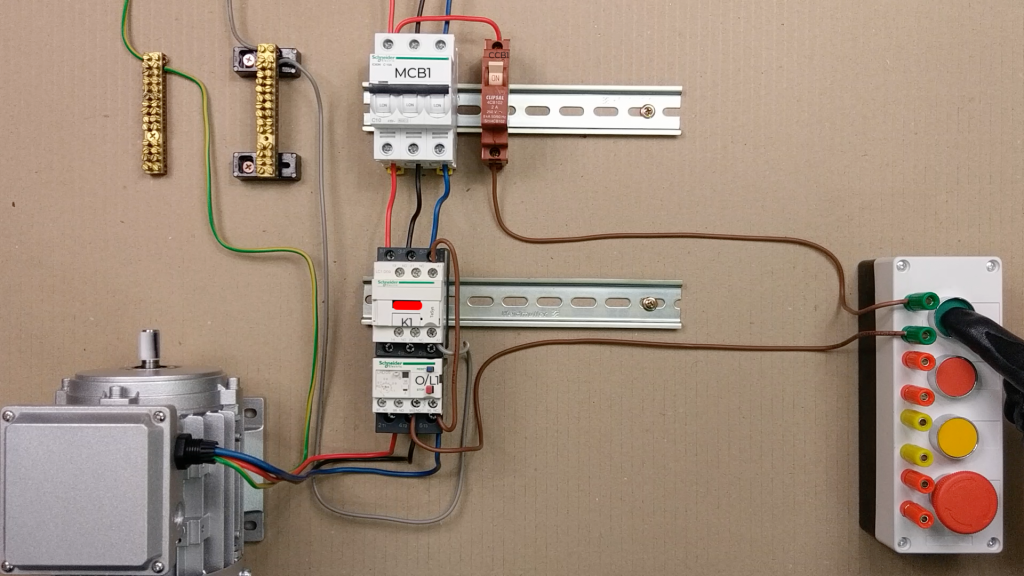
A push button connected to an electrical contact is simply that. The contact is the part that handles the electric current and the button is the part you push with your finger. They usually have a spring return inside them which means that as soon as you take your finger away the contact will spring back too.
How They Are Used

In an electrical control circuit, push buttons (connected to contacts) are responsible for sending current to other components such as relays or contactors. They are used to either send electrical signals to parts of a circuit or stop them. By pressing a button you can essentially energise or de-energise a control circuit which could start or stop an electric motor. An appliance operated by buttons could be as simple as a motor stop/start station, or as complex as a crane hoist that has over 20 buttons. PBs can be connected to 1 or many contacts (normally open or normally closed), they have many uses and can come in many colours too!
To Recap
Push buttons are components found in electrical control circuits, they are usually connected to electrical contacts and have a spring return mechanism. When pressed they can energise or de-energise a control circuit.
Learn more
Fundamentals of Electrical Controls
3 Phase Motor Control Bootcamp
Learn Variable Frequency Drives